Flesh and Blood at the Table: Why Live Dealer Games Are Dominating the Online Gaming Scene
For years, online gaming ran on algorithms. You clicked, the software responded, and somewhere in a data center, a random number generator decided your fate. It was clean, fast, and totally impersonal — and for a long time, players were fine with that.
Then live dealer games showed up, and suddenly "fine" wasn't good enough anymore.
The numbers tell a striking story. Live dealer gaming has become one of the fastest-growing segments in the entire online entertainment industry. Major platforms are pouring serious investment into studio infrastructure, camera technology, and dealer recruitment — not because it's a passing gimmick, but because players keep coming back for it in a way they simply don't for standard digital formats. So what's really going on here?
The Human Factor Is More Powerful Than Anyone Expected
Here's something that behavioral researchers have understood for decades but that the gaming industry is only now fully reckoning with: people are wired for human connection in ways that no amount of polished UI design can replicate.
When you're sitting across from a virtual dealer — even a beautifully animated one — your brain knows it's talking to a program. The interaction feels transactional. You're essentially pulling a lever with extra steps.
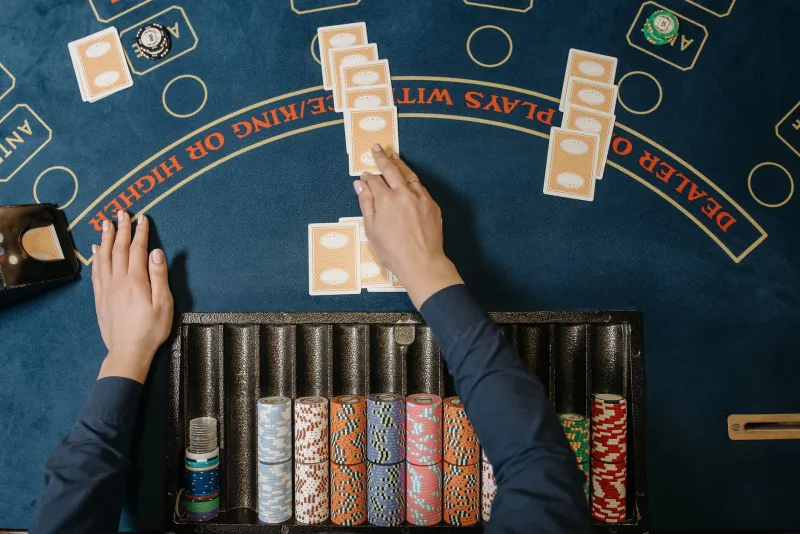
But when a real person shuffles a real deck, makes eye contact with the camera, and says "good luck" before flipping a card? Something different fires. Your mirror neurons engage. You feel seen, even through a screen. That sense of genuine interaction — however mediated by technology — creates an emotional investment that digital-only formats struggle to manufacture.
For US players especially, who are used to the energy of places like Las Vegas or Atlantic City, live dealer games offer something that hits closer to that familiar feeling without requiring a plane ticket or a hotel room.
The Tech Stack Making It All Possible
None of this would work if the experience felt choppy or delayed. The reason live dealer gaming has scaled the way it has comes down to some serious technological legwork happening behind the scenes.
Optical character recognition — OCR technology — allows platforms to instantly translate physical card movements and game actions into digital data that updates your screen in real time. Multiple HD cameras capture the table from different angles simultaneously, giving players the ability to switch views mid-game. Latency has dropped dramatically thanks to improvements in streaming infrastructure and the broader rollout of high-speed internet across the country.
The result is an experience that feels genuinely seamless. You're watching a dealer in a purpose-built studio — sometimes themed to look like a Vegas lounge, sometimes sleek and minimalist — and the whole thing moves at a pace that matches what you'd expect sitting at a physical table. The technology has essentially become invisible, which is exactly when technology works best.
Why Players Trust It More
There's also a trust dimension that doesn't get talked about enough. One of the persistent concerns in online gaming has always been the question of fairness. With a purely digital system, the outcomes are determined by software, and even when that software is certified and audited, some players carry a background skepticism about whether the deck is truly even.
Live dealer formats short-circuit that anxiety in a pretty elegant way. When you can watch a human being physically shuffle and deal cards, the process feels transparent. You're not taking anyone's word for it — you're seeing it happen. That visibility builds a kind of confidence that translates directly into longer sessions and higher engagement.
Platforms have picked up on this. Many now offer replay features, letting players review hands after the fact. Some studios operate under multiple camera angles specifically to reinforce that nothing is hidden. It's trust by design.
The Social Layer That Nobody Saw Coming
Here's the part that surprised even industry analysts: live dealer games have developed a genuine social dimension.
Most platforms include a chat function that lets players interact with the dealer and, in some cases, with each other. What sounds like a minor feature has turned into something that meaningfully changes how people experience the game. Dealers who are engaging, funny, or just warm create regulars — players who come back specifically for a particular host's table.
It's a dynamic that looks a lot more like appointment television than traditional gaming. People show up at certain times because they enjoy the vibe of a specific dealer's stream. Some dealers have developed genuine followings. That's a level of brand loyalty that the old digital-only format never came close to generating.
For US audiences who've grown up watching streamers and content creators build communities around personality, this feels intuitive. The parasocial relationship between viewer and host is a well-established cultural pattern — live dealer gaming has just found its own version of it.
Where the Money Is Going
The investment flowing into this space reflects how seriously major operators are taking the trend. Building a proper live dealer studio isn't cheap. You need physical space, professional lighting rigs, multiple camera setups, trained dealers, and around-the-clock operational staff. The ongoing costs are significantly higher than maintaining a library of digital slot titles.
And yet platforms keep expanding their live offerings. New game formats are appearing regularly — game show-style experiences that blend elements of slots and live interaction, specialized table variants, and high-roller rooms with elevated production values. The diversity of options has grown substantially in just the past few years.
The math clearly works in favor of continued expansion. Live dealer players tend to spend more time on platform, show stronger retention numbers, and demonstrate higher lifetime value than players who stick exclusively to digital formats. When the data points that clearly in one direction, the money follows.
What It Means for the Future of Online Entertainment
Live dealer gaming is arguably the clearest signal yet that online entertainment is moving toward a hybrid model — one that combines the convenience and accessibility of digital platforms with experiences that feel genuinely human and present.
As technology continues to improve, the gap between a live dealer session and actually being in a casino is going to keep narrowing. Augmented and virtual reality integrations are already being tested by some developers, pointing toward a future where the immersion goes even deeper.
But here's the thing — the core appeal isn't really about technology at all. It's about the fact that people like people. They like watching a real hand shuffle a real deck. They like being wished luck by someone who means it, even a little. They like the feeling that there's a human being on the other side of the screen who's part of the same moment they are.
That instinct isn't going anywhere. And smart platforms are building their futures around it.